


LHC, government resolve Nikahnama reform dispute through consultation
 Rabbia Zafar
|
1 week ago
Rabbia Zafar
|
1 week ago
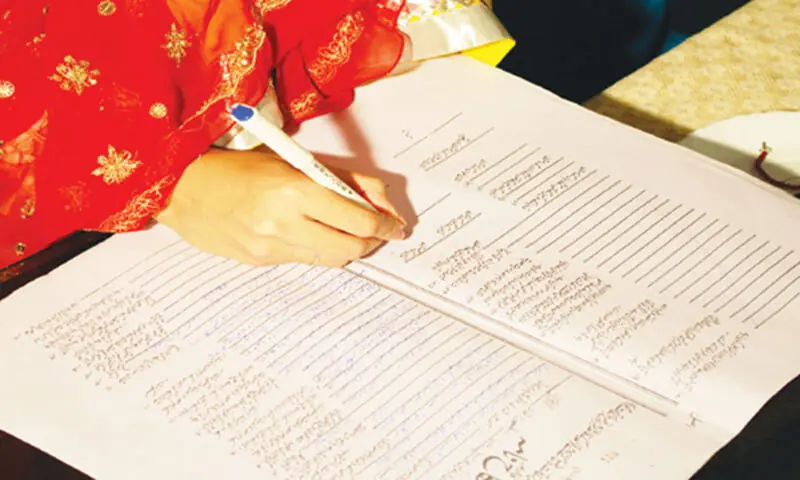
Differences between the judiciary and the government over proposed legal reforms were resolved through consultation with the legal community, as efforts advanced to introduce greater clarity in the Nikahnama (marriage contract) system in Pakistan.
The matter came before Justice Jawad Hassan at the Rawalpindi Bench of the Lahore High Court (LHC), who declared it one of “public importance”. The court highlighted inconsistencies between the Urdu and English versions of key Nikahnama clauses, particularly columns 13 and 16, which deal with dower (haq mehr) and dowry-related details.
The court observed that vague and inconsistent translations had led to confusion, prolonged litigation, and hardship for women involved in family disputes. It stressed the need for immediate legislative clarity to “settle this once and for all” and reduce legal ambiguity in matrimonial contracts.
Cuba accuses US of lying over oil blockade amid escalating tensions
To address the issue, the LHC directed the formation of an eight-member committee to review potential amendments to the Muslim Family Laws Ordinance 1961, including provisions related to matrimonial property rights under Section 10A.
However, the Ministry of Law and Justice expressed reservations over judicial involvement in legislative processes, stating that such pre-legislative intervention could affect constitutional separation of powers. The ministry maintained that parliament and other constitutional forums, including the Council of Islamic Ideology, are the appropriate platforms for lawmaking and ensuring compliance with Islamic injunctions.
Despite differing institutional views, the reform process moved forward under the court’s continuing mandamus doctrine. Legal experts noted that active engagement from the bar and legal practitioners has helped identify systemic gaps and shape policy discussions, particularly regarding women’s property and contractual rights.
Following consultations, the law ministry formed a technical committee that held multiple sessions to examine translation errors and legal implications. The committee recommended that the updated English version of the Nikahnama be formally translated into Urdu through the National Language Authority in coordination with relevant ministries.
Stakeholders have expressed optimism that a standardized bilingual Nikahnama will soon be introduced to ensure legal clarity, consistency, and stronger protection for parties entering marriage contracts.
Finance Ministry denies reports of Dar taking over budget process

Israeli settlers storm Al-Aqsa Mosque compound in Jerusalem
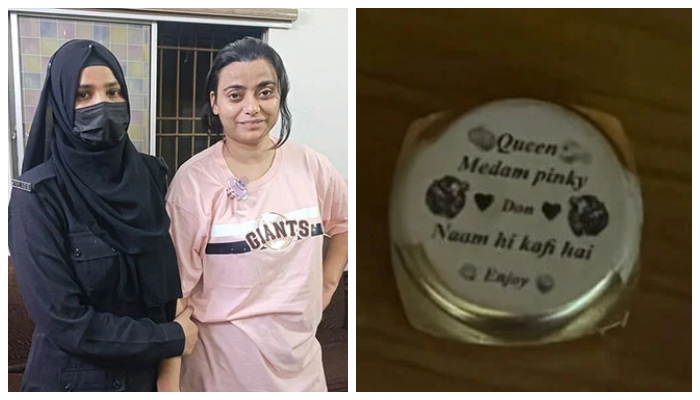
Drug suspect Pinky claims police took bribes during investigation
Ahsan Iqbal vows greater economic empowerment for women
Pakistan launches probe into Cambridge exam paper leaks amid student concerns
USourt blocks sanctions on un palestine rights expert francesca albanese
ppp leader warns political system cannot function without party



4 hours ago

4 hours ago

4 hours ago

5 hours ago

5 hours ago
5 hours ago
- Dozens of Israeli settlers entered the Al-Aqsa Mosque compound in occupied East Jerusalem on Thursday under the protection of Israeli…
- A United States federal judge has issued a temporary injunction blocking sanctions imposed by Washington on United Nations Special Rapporteur…
 A report cited by an international research organisation has raised concerns over the treatment of religious minorities in India and…
- Six Arab countries have jointly urged United Nations to press Iran to withdraw what they described as unilateral regulations imposed…
 A major shift in medical terminology has been announced for Polycystic Ovarian Syndrome (PCOS), a common hormonal disorder affecting millions…
 Health authorities are working to contain a potential international spread of hantavirus after new suspected cases emerged across multiple countries,…
 The Indus Hospital, located in Karachi’s Korangi area, has earned widespread recognition for providing free and quality healthcare services to…
- The Healthcare Devices Association of Pakistan (HDAP) has raised serious concerns over the continued presence of banned reusable syringes in…



- Pakistan’s Ministry of Finance has rejected media reports claiming that…4 hours ago
- Dozens of Israeli settlers entered the Al-Aqsa Mosque compound in…4 hours ago
- A woman arrested on drug trafficking charges in Karachi, identified…4 hours ago
- Federal Minister for Planning Ahsan Iqbal has said that empowering…5 hours ago